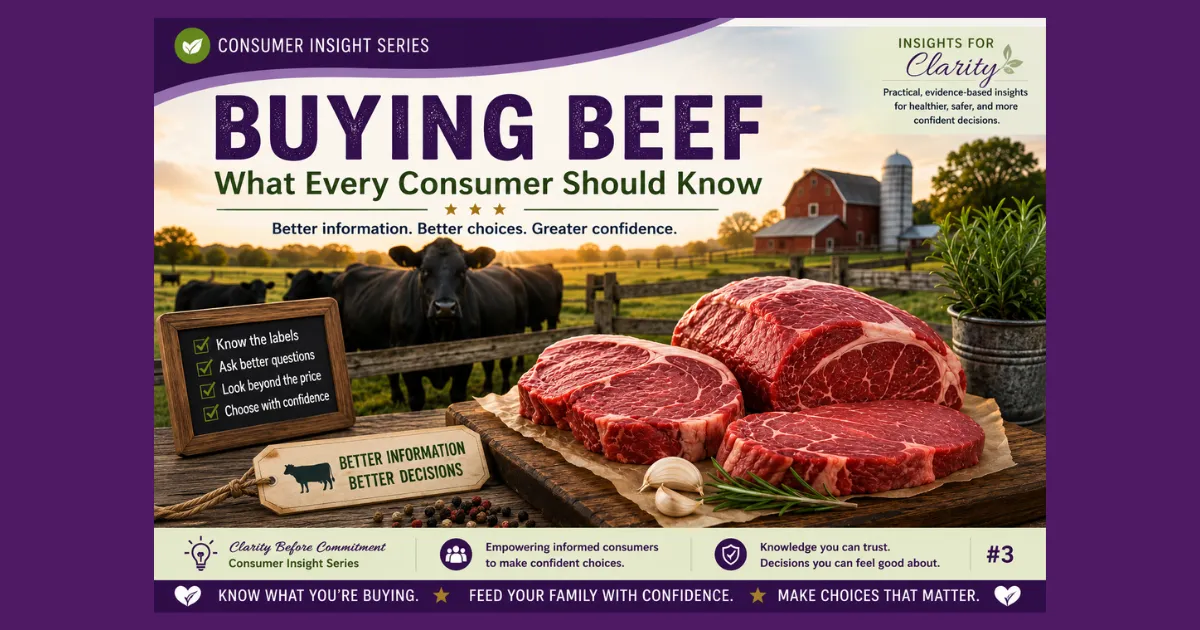
What's Really in Your Beef - And Why It's Important You Know It
What's Really in Your Beef - And Why It's Important To You.
A Consumer's Guide to Price, Health, Labels, Quality, and Where Your Beef Comes From
"The more I research the products we bring into our homes, the more I realize that asking better questions often leads to better decisions."
Walk into almost any grocery store today, and you'll notice something interesting.
Packages proudly advertise "100% Real Beef." Others highlight grass-fed, organic, natural, Prime, Choice, no antibiotics ever, or raised in the USA.
Some shoppers head straight to the local butcher, believing that automatically means higher quality. Others choose whatever is on sale. Still others wonder if they should avoid beef altogether because they've heard it's unhealthy.
The truth?
There has probably never been a time when consumers have had more information - or more confusion.
Beef has become one of the most misunderstood foods in the grocery store.
Questions about price, nutrition, hormones, antibiotics, country of origin, production methods, and food labels have become increasingly common. Unfortunately, many of the answers shared online are oversimplified, incomplete, or sometimes simply wrong.
This article isn't about convincing you to eat more beef - or less. It's about helping you understand what you're buying so you can make more informed decisions for yourself and your family.
Let's start with one question nearly everyone is asking...
Why Has Beef Become So Expensive?
If you've noticed that the price of ground beef, steaks, and roasts has climbed dramatically over the past few years, you're certainly not imagining it.
Many people assume grocery stores are simply charging more. The reality is far more complex.
Unlike many manufactured products, beef production can't simply be increased overnight. Raising cattle is a multi-year process, and the number of cattle available today reflects decisions ranchers made several years ago.
Over the past several years, a combination of factors has created one of the tightest beef supplies in decades.
These include:
A shrinking U.S. cattle herd
Severe drought conditions across major cattle-producing regions
Rising feed, fuel, and transportation costs
Labor shortages
Disease concerns affecting livestock
Strong consumer demand for beef
Higher processing and operating costs throughout the supply chain
According to a recent Chicago Tribune Newspaper report, the U.S. cattle inventory is at its lowest level in decades, and experts believe rebuilding the national herd will take years - not months. That means beef prices may remain elevated even as other grocery prices begin to stabilize.
The important takeaway is that beef prices reflect much more than what's happening at your local grocery store. Every step - from raising cattle to transporting, processing, and delivering beef to market - affects the final price you pay.


One thing is becoming increasingly clear:
👉 Price alone doesn't tell the whole story.
To really understand the value of beef, we also need to understand its nutritional value - and separate long-standing myths from current evidence.
Is Beef Actually Healthy? (Debunking The Myth)
Ask ten people whether beef is healthy, and you're likely to hear ten different answers.
👉 Some will tell you red meat should be avoided completely.
👉 Others believe it's one of the most nutrient-dense foods available.
As with many nutrition topics, the reality is more balanced than either extreme.
Beef is a whole food that naturally provides several nutrients your body needs, including:
Complete, high-quality protein
Iron
Vitamin B12
Zinc
Selenium
Phosphorus
Niacin
Vitamin B6
Protein helps build and maintain muscles, supports healing, and contributes to healthy bones as we age. Iron helps carry oxygen throughout the body, while vitamin B12 supports healthy nerves and red blood cells.
These nutrients are one reason beef continues to be included in many healthy eating patterns around the world.
However, not all beef is exactly the same.
The nutritional profile can vary depending on:
The cut of meat
How it was raised and with what added
How much visible fat it contains
Portion size
How it's prepared
What it's served with
A grilled sirloin steak served alongside vegetables and a baked potato is nutritionally very different from a double bacon cheeseburger with fries and a sugary soft drink - even though both contain beef. (And the reality is that the actual BEEF in that cheeseburger is usually NOT the highest quality or healthiest either).
🔥 Current nutrition research increasingly emphasizes looking at overall dietary patterns rather than labeling one single food as "good" or "bad."
In other words, what you eat most of the time matters far more than any one meal.
That doesn't mean every type of beef - or every way of raising cattle - is identical. Production practices, processing methods, and labeling all deserve a closer look.
And that's where many consumers begin asking even better questions.

Is Beef Really the Problem?
For years, many headlines have suggested that red meat is one of the biggest contributors to poor heart health.
But nutrition science has continued to evolve.
Today, many researchers agree that it's often too simplistic to blame a single food for complex health conditions like heart disease. Our health is influenced by a combination of factors, including genetics, physical activity, smoking, sleep, stress, overall dietary patterns, and maintaining a healthy body weight.
That doesn't mean every beef product is equally nutritious - nor does it mean everyone should eat the same amount. What it does mean is that context matters.
Consider these two meals:
A grilled lean sirloin steak with roasted vegetables and a baked sweet potato.
A double bacon cheeseburger with fries and a large sugary soft drink.
Both meals contain beef - and yet they are not nutritionally the same.
The difference isn't simply the beef. It's the entire meal.
Current dietary guidance increasingly focuses on overall eating patterns rather than labeling one food as "good" or "bad."
Choosing leaner cuts, eating appropriate portions, limiting highly processed foods, and including plenty of fruits, vegetables, whole grains, and fiber-rich foods are all part of building a heart-healthy lifestyle.
Perhaps the better question isn't: "Is beef healthy?"
Instead, ask: "What kind of beef am I eating, how much, how is it prepared, and what am I eating with it?"
Those questions provide a much clearer picture of how beef fits into your overall diet.


What Does "Real Beef" Actually Mean?
Walk through almost any grocery store today, and you'll likely notice packages proudly displaying phrases such as:
100% Real Beef
100% Beef
All Beef
Made with Real Beef
At first glance, those labels sound reassuring. But they also raise an important question.
What exactly does "real beef" mean? The answer may surprise you.
In most cases, these labels simply indicate that the meat comes from cattle rather than another animal. They generally describe what the product is, not how it was produced.
In other words, the phrase "real beef" doesn't automatically tell you:
Where the cattle were raised
Whether the beef came from the United States or another country
What the cattle were fed
Whether added growth hormones were used
Whether antibiotics were ever administered
Whether the cattle were pasture-raised or finished in a feedlot
How the animals were cared for
Whether the production practices can be independently verified
That's why consumers should view "real beef" as just one piece of information - not the entire story.
The most valuable information often comes from asking additional questions and understanding what other labels actually mean.
Because while "real beef" tells you what you're buying... It doesn't necessarily tell you how it got there.

USDA Grade Doesn't Tell You How the Animal Was Raised
Another common misconception is that USDA grades describe how cattle were raised.
They don't.
USDA quality grades are designed to help consumers understand the expected eating quality of beef - primarily its tenderness, juiciness, and flavor.
The three grades most consumers see are:
USDA Prime
Prime represents the highest quality grade based largely on marbling - the small flecks of fat found within the muscle. Prime beef is often served in high-end restaurants and is known for exceptional tenderness and flavor. Only a small percentage of beef earns this grade.
USDA Choice
Choice beef is also high-quality but has slightly less marbling than Prime. It offers an excellent balance of tenderness, flavor, and value, making it one of the most common grades found in grocery stores. (And there is also High-Choice and Choice, and yes, they are completely different).
USDA Select
Select beef is generally leaner with less marbling. When prepared properly, it can still be tender and flavorful, although it may be slightly less juicy than Prime or Choice.
Here's where many consumers become confused.
These grades do nottell you:
Whether hormones were used.
Whether antibiotics were used.
Whether the cattle were grass-fed.
Whether they were pasture-raised.
Whether the beef was imported.
Whether it was raised organically.
USDA grades answer one question:
"How is this beef expected to be eaten?"
They do not answer: "How was this beef produced?"
Understanding that distinction can help you read labels with much greater confidence.

Hormones and Antibiotics Are Not the Same Thing
One of the biggest misconceptions surrounding beef is that growth hormones and antibiotics are the same thing.
They aren't.
Although both are frequently discussed together, they serve very different purposes and raise different questions for consumers. Understanding that distinction can help you make more informed decisions at the meat counter.
Hormones
When cattle are exposed to hormones, it generally means "Growth Hormones," although they rarely make that clear. Growth-promoting hormones are used by some beef producers to help cattle convert feed into muscle more efficiently. This can reduce the amount of feed and time needed to raise an animal to market weight.
Several naturally occurring and synthetic hormones are approved for use in U.S. beef production under federal regulations.
However, not every ranch chooses to use them.
Some producers voluntarily raise cattle without added growth hormones and clearly state that on their packaging or websites.
If avoiding added growth hormones is important to you, it's worth looking for products that specifically make that claim rather than assuming all beef is raised the same way.
Antibiotics
Antibiotics serve an entirely different purpose. Their primary role is to treat bacterial infections and help maintain animal health when cattle become ill.
Most people would agree that sick animals should receive appropriate veterinary care. And, on responsible ranches, they DO receive that. If the ranch or brand says "NO ANTIBIOTICS", the responsible move any cattle that require antibiotics to a separate location (area or ranch), and although they do sell that meat, it is sold separately and is NOT part of the "No Antibiotic" cattle meat.
Where consumers - and many public health experts - become concerned is the routine or widespread use of medically important antibiotics across livestock populations, because over time this may contribute to antimicrobial resistance.
According to public health research, the use of medically important antibiotics in food-producing animals has declined since important FDA policy changes, but beef and pork production still account for a large share of these antibiotics sold for livestock.
This is one reason some consumers intentionally look for beef marketed & labeled "No Antibiotics Ever."
Two Different Questions
Consumers often combine these topics into one.
Instead, think of them separately.
Hormones ask: "How was this animal raised?"
Antibiotics ask: "How was this animal cared for if it became sick?"
They're different questions. And both deserve thoughtful consideration.
The good news is that consumers today have more choices than ever before.
Many ranches now clearly communicate whether they use added growth hormones and/or antibiotics, and under what circumstances.
The key is to read beyond the marketing headline and understand what those claims actually mean.

What "No Antibiotics Ever" and "No Added Hormones" Really Mean
Walk through today's grocery store, and you'll see dozens of labels competing for your attention.
Some are carefully regulated.
Others are marketing phrases designed to catch your eye.
Knowing the difference can help you shop with greater confidence. Let's look at two claims that many consumers actively seek.
"No Added Hormones"
This claim means the producer states that added growth-promoting hormones were not used during the animal's life. That tells you something meaningful about the ranch's production practices.
However, it doesn't automatically tell you:
Where the cattle were raised
Whether antibiotics were used
Whether the cattle were grass-fed
Whether the beef is USDA Prime or Choice
How the animals were finished
It's one piece of the story - not the entire story.
"No Antibiotics Ever"
This label generally indicates that cattle were raised without receiving antibiotics during their lifetime.
For consumers who are specifically looking to avoid beef from cattle treated with antibiotics, this provides important information. Again, however, it doesn't answer every question.
It doesn't necessarily tell you:
Whether added growth hormones were used
Whether the cattle were grass-fed
Where they were raised
Whether they were pasture-raised
How they were processed
Marketing Language Can Be Confusing
Many other phrases sound reassuring but may not answer the questions consumers actually have.
Examples include:
Farm Fresh
Premium
Naturally Raised
Family Farm
Ranch Raised
Hand Selected
Some companies define these terms clearly. Others may use them more broadly.
That's why it's important to look beyond attractive packaging and ask:
➡️ Can this claim be explained?
➡️ Can it be documented?
➡️ Who is actually making the claim - the ranch, the processor, or the retailer?
The more transparent a company is about its production practices, the easier it becomes for consumers to make informed choices.
Because at the end of the day, confidence doesn't come from colorful labels - it comes from understanding what those labels actually mean.

Buying From a Butcher Doesn't Automatically Mean Better Beef
Many people believe buying beef from a local butcher is always a healthier or higher-quality choice than buying it from a grocery store.
Sometimes it is. Sometimes it isn't.
The important point is that where you buy your beef doesn't automatically tell you how it was raised.
Most butchers are highly knowledgeable about meat. They often provide excellent service, custom cuts, and helpful cooking advice.
But most butchers are not the ranchers who raised the cattle.
Instead, many purchase beef from:
Meat processors
Regional distributors
Packing companies
Wholesalers
Multiple ranches
Some butchers have direct relationships with local ranches. Others source beef from larger suppliers.
That means buying from a butcher doesn't automatically verify claims such as:
No added growth hormones
No antibiotics ever
Grass-fed
Grass-finished
Pasture-raised
Raised entirely in the USA
Those claims still depend on the producer. If those production practices matter to you, don't hesitate to ask questions. A reputable butcher will often know where the beef came from and may even have documentation from the supplier. If not, remember that assumptions aren't the same as evidence.
The goal isn't to avoid butchers.
The goal is simply to understand that the source of the beef matters more than the location where you purchase it.

Why Traceability Matters More Than the Store You Buy It From
If you've followed my previous Consumer Insights articles, you've probably noticed a common theme.
Whether we're talking about cleaning products, nutrition, or household items, one question keeps coming up:
Can the claims be verified?
Beef is no different.
The more transparent a company is about its production practices, the easier it becomes for consumers to make informed decisions.
Instead of relying solely on attractive packaging or marketing language, look for companies that clearly explain:
Where the cattle were raised
Whether they use added growth hormones
Whether antibiotics are used—and under what circumstances
How the cattle are fed
Where the beef is processed
Whether production practices are documented
Whether independent certifications or recognized standards support those claims
Transparency builds confidence. And confidence comes from having information - not assumptions.
As consumers, we don't have to know everything. But we can learn to ask better questions.

Why "Raised in the USA" Matters
For many Americans, buying products made in the United States is about more than patriotism. It's about confidence. When you know where your food comes from, it's often easier to understand the standards behind its production.
Choosing beef that is born, raised, and processed in the United States may provide several benefits that matter to consumers.
Supporting American Agriculture
Every purchase helps support:
American ranching families
Rural communities
U.S. jobs
Domestic agriculture
Local economies
For many people, that's an important consideration.
Transparency
When beef is raised within the United States, consumers may find it easier to learn about:
Production practices
Ranching standards
Animal care
Processing methods
Company policies
That transparency can make it easier to compare one producer with another.
Supply Chain
Some imported beef travels thousands of miles before reaching an American grocery store. That doesn't automatically mean imported beef is unsafe or lower quality. Countries such as Australia and New Zealand, for example, are respected beef producers with established food safety systems.
However, a longer supply chain can make it more difficult for consumers to understand exactly where the beef originated, how it changed hands, and how long it traveled before arriving at the store.
For consumers who value traceability and supporting domestic agriculture, looking for beef that is born, raised, and processed in the USA may provide greater confidence.
Read the Label Carefully
This is another area where wording matters. You may see labels such as:
Product of the USA
Born, Raised, and Harvested in the USA
Raised in the USA
Imported
Product of Australia
Product of New Zealand
Product of Canada
Product of Mexico
These statements don't always mean the same thing. Taking a few extra seconds to read the label carefully can help you better understand where your beef actually came from.
At the end of the day, every family has different priorities.
Some focus primarily on price.
Others prioritize nutrition.
Others care most about production practices, animal welfare, or supporting American ranchers.
There isn't one right answer for everyone.
But there is one habit that benefits every consumer:
Know what you're buying—and don't be afraid to ask questions.

Buying U.S.-raised beef isn't about saying imported beef is bad. It's about understanding where your food comes from and choosing what matters most to you
Consumer Tip
Before placing beef in your cart, take 30 seconds to look beyond the price tag. Read the label, identify the country of origin, look for production claims that matter to you, and ask yourself one simple question:
"Do I have enough information to feel confident about this purchase?"
Sometimes, those extra few seconds can make all the difference.
Freshness Is More Than the Sell-By Date
Many shoppers glance at one thing before putting beef in their cart: The sell-by date on the package.
While that's certainly important, freshness is much more than a single printed date.
Questions worth considering include:
How far did the beef travel?
Was it previously frozen?
How long was it aged?
How was it transported?
How many times did it change hands before reaching the store?
Some beef may come from a ranch only a few hundred miles away. Other products may travel thousands of miles through multiple processing and distribution centers before reaching your grocery store.
That doesn't automatically mean imported beef is lower quality. Many imported products are excellent.
But shorter, more transparent supply chains often give consumers greater confidence because there are simply fewer unknowns.
Freshness is about the entire journey - not just the date on the package.

Grass-Fed, Grass-Finished, Organic, Natural...What Do These Labels Actually Mean?
Few areas create more confusion than food labels. Many consumers assume these words all mean the same thing.
They don't. Understanding the differences can help you avoid paying more for claims you may not fully understand.
Brief explanations:
Grass-Fed
Cattle ate grass for at least part of their lives but may have been grain-finished.
Grass-Finished
Cattle remained on a grass-based diet until harvest.
Organic
Must meet USDA organic production standards, including feed and restrictions on many medications and synthetic substances and their exposure to pesticides.
Natural
Generally refers to minimal processing of the meat itself - not necessarily how the cattle were raised.
Pasture-Raised
Indicates cattle spent time on pasture, but definitions and practices can vary.
The lesson? Don't assume one label tells the entire story. Instead, understand what each claim actually represents.

What Questions Should You Ask Before Buying Beef?
After everything we've discussed, here's a simple checklist to help you become a more informed consumer.
Ask yourself:
✔ Where was this beef raised?
✔ Is it born, raised, and processed in the USA?
✔ Can the production practices be verified?
✔ Were added growth hormones used?
✔ Were antibiotics used?
✔ Is it USDA Prime, Choice, or Select?
✔ Is it grass-fed or grass-finished?
✔ Is it fresh or previously frozen?
✔ Am I paying for marketing - or documented quality?
Those few questions can tell you far more than the front of the package ever will.

Continue the Conversation
When you're standing at the meat counter, what's most important to you?
🥩 Price?
🇺🇸 Country of origin?
🌱 How the cattle were raised?
❤️ Nutrition - for you or what the cattle received that you will be eating?
👨🌾 Supporting American ranchers?
Or something else?
I'd love to hear what factors influence your decision when purchasing beef. Share your thoughts in the comments below.
Key Takeaways
Not all beef is produced the same way.Factors such as feed, production practices, animal care, and processing can vary significantly between producers.
"Real beef" doesn't tell the whole story.Marketing terms like100% Real Beefdescribe what the product is, but not how the cattle were raised or where the beef came from.
USDA grades measure eating quality—not production practices.Prime, Choice, and Select refer to marbling, tenderness, and flavor. They do not indicate whether hormones, antibiotics, or specific feeding practices were used.
Growth hormones and antibiotics are different issues.They serve different purposes in beef production and should not be confused when evaluating labels or production practices.
Buying from a butcher doesn't automatically mean the beef was raised differently.Most butchers purchase beef from processors or distributors, so it's important to ask about the source and whether production claims can be verified.
Country of origin matters to many consumers.Choosing beef that is born, raised, and processed in the United States may provide greater transparency, support American ranchers, and shorten the supply chain.
Freshness is about more than the sell-by date.Transportation, storage, handling, and the length of the supply chain all contribute to the overall quality of the beef you bring home.
Food labels don't always mean what consumers think they mean.Terms such asgrass-fed,grass-finished,organic,natural, andpasture-raisedeach have different meanings and should be understood before making purchasing decisions.
Lean beef can be part of a balanced, heart-healthy eating pattern.Overall dietary habits, portion sizes, food preparation, and lifestyle choices have a much greater impact on long-term health than any single food.
Better questions lead to better decisions.Understanding labels, verifying production claims, and learning where your food comes from can help you make more confident choices for yourself and your family.
Frequently Asked Questions
Is beef healthy?
Beef can be part of a healthy, balanced diet when consumed in appropriate portions and as part of an overall nutritious eating pattern. Beef naturally provides high-quality complete protein, iron, vitamin B12, zinc, selenium, and other essential nutrients that support muscle health, energy production, and normal body function. Like many foods, its nutritional value depends on factors such as the cut of meat, portion size, preparation method, and what it's served with. Rather than labeling beef as simply "good" or "bad," most nutrition experts encourage focusing on your overall dietary pattern and lifestyle.
Is lean beef heart healthy?
Lean beef can fit into a heart-healthy eating pattern when enjoyed in moderation. Choosing leaner cuts, trimming visible fat, using healthier cooking methods such as grilling or roasting, and pairing beef with vegetables, fruits, whole grains, and other fiber-rich foods can help create balanced meals. Heart health is influenced by many factors - including physical activity, smoking, sleep, body weight, genetics, and your overall eating habits - rather than by one individual food alone.
What does "Real Beef" mean?
In most cases, labels such as "100% Real Beef," "100% Beef, "or" All Beef" simply indicate that the meat comes from cattle rather than another animal. These labels generally describe what the product is, not how it was produced. They do not tell you where the cattle were raised, what they were fed, whether antibiotics or added growth hormones were used, or whether the beef was produced in the United States. Consumers should view "Real Beef" as only one piece of information and look for additional details when making purchasing decisions.
What is the difference between USDA Prime, Choice, and Select?
USDA Prime, Choice, and Select are quality grades that describe the expected tenderness, juiciness, and flavor of beef based primarily on marbling. Prime has the highest amount of marbling and is generally the most tender. Choice offers excellent quality with slightly less marbling, while Select is leaner with less marbling. These grades do not indicate whether cattle were grass-fed, raised without antibiotics or hormones, organically produced, or raised in the United States.
Are hormones and antibiotics the same thing?
No. Growth-promoting hormones and antibiotics serve different purposes in beef production. Growth hormones may be used by some producers to improve feed efficiency and growth, while antibiotics are used to treat bacterial illness and protect animal health under veterinary guidance. Consumers often confuse the two, but they represent separate production practices. If these issues are important to you, read product labels carefully and understand exactly what each claim means before making a purchase.
Is imported beef safe?
Imported beef can be safe to eat when it meets U.S. import requirements and food safety standards. Countries such as Australia, New Zealand, and Canada have well-established beef industries and inspection systems. However, many consumers prefer beef that is born, raised, and processed in the United States because they value supporting American ranchers, greater supply-chain transparency, and knowing more about where their food comes from. Ultimately, the country of origin is a personal purchasing decision rather than simply a food safety issue.
Why has beef become so expensive?
Beef prices have increased because of several factors affecting the entire supply chain. These include a smaller U.S. cattle herd, drought conditions, higher feed costs, increased fuel and transportation expenses, labor shortages, processing costs, and continued consumer demand. Unlike many products, cattle production cannot be expanded quickly, so rebuilding the national herd takes years rather than months. As a result, beef prices may remain elevated even as prices for some other grocery items stabilize.
Is beef from a butcher better than beef from the grocery store?
Not necessarily. Many people assume buying from a butcher automatically means higher-quality or healthier beef, but most butchers purchase beef from processors or distributors rather than raising the cattle themselves. Some have direct relationships with local ranches, while others source from larger suppliers. The important question is not where you buy the beef, but whether the production practices can be verified. Don't hesitate to ask where the beef came from and what documentation is available regarding claims such as "No Antibiotics Ever" or "No Added Hormones."
What does "No Antibiotics Ever" mean?
"No Antibiotics Ever" generally means the cattle were raised without receiving antibiotics at any point in their lives. This claim tells consumers something specific about how the animals were managed. However, it does not automatically tell you whether the cattle were grass-fed, raised without added growth hormones, organically produced, or born and raised in the United States. Like all food labels, it should be considered as one piece of information rather than the complete story.
What should I look for when buying beef?
Start by deciding what matters most to you. Consider the country of origin, USDA quality grade, production practices, and whether claims such as "No Added Hormones," "No Antibiotics Ever," grass-fed, or grass-finished align with your priorities. Look beyond marketing phrases and read labels carefully. If you're buying from a butcher or specialty retailer, don't hesitate to ask where the beef came from and whether production claims can be verified. The more informed you are, the more confidently you can choose beef that fits your family's values, budget, and nutritional goals.
Can I trust food labels on beef?
Many food labels provide useful information, but not all labels communicate the same level of detail. Specific claims such as USDA Prime, No Antibiotics Ever, or Born, Raised and Harvested in the USA have defined meanings or documented standards. Other phrases, such as Premium, Farm Fresh, or Naturally Raised, may be less specific and can vary by producer. Rather than relying on a single phrase on the front of the package, read the complete label and look for clear, verifiable information that helps you understand how the beef was produced.
I only eat affordable USA Raised & Processed, No Hormones & No Antibiotics beef, delivered right to my door. If you have any questions, just reach out! [email protected]


