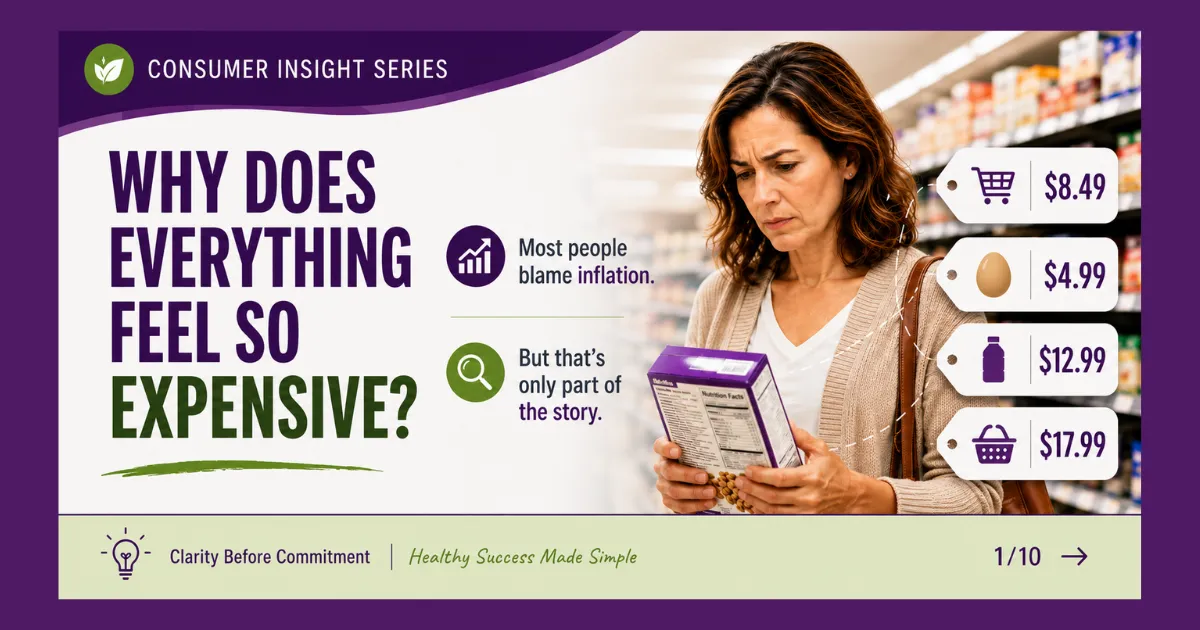
Why does everything feel so expensive?
Why Does Everything Feel So Expensive?
Understanding the Hidden Costs Behind the Household, Wellness, and Everyday Products We Buy Most Often
Published by Simply Marianne
Quick Answer
Many people assume inflation is the primary reason prices have increased. While inflation certainly plays a role, it's only one part of the story. The price of almost every product also reflects manufacturing, transportation, warehousing, labor, marketing, retail overhead, inventory management, and the business model used to deliver it. Understanding these factors can help consumers make more informed purchasing decisions and identify alternatives that better fit their priorities.
While rising prices affect almost everything - from restaurants to tires and hotel rooms - this article focuses primarily on everyday consumable products because these are purchases most families make repeatedly.
Understanding how these products are manufactured, distributed, marketed, and delivered can help you make more informed decisions every month - not just once every few years.
In This Article You'll Learn
Why inflation isn't the whole story
What actually happens before a product reaches your shopping cart
How different business models influence pricing
Why marketing costs often become part of the price you pay
How asking better questions can help you make smarter purchasing decisions
We've All Had This Moment...
You walk into the grocery store for "just a few things" - A few everyday essentials.
Maybe it's:
• Laundry detergent
• Shampoo
• Dish soap
• Toothpaste
• Vitamins
• Healthy snacks
• Paper towels
• Coffee
• Fresh produce
You reach the checkout... …and wonder:
"How did that cost so much?"
It's a question many of us ask today - and the easiest answer is inflation. And while inflation certainly matters, it doesn't explain everything.
To really understand why prices have changed, we have to look beyond the price tag itself.
The Price Tag Only Tells You What It Costs
It Doesn't Tell You Why.
Every product has a story.
Before it reaches your home, it may pass through dozens of people, companies, warehouses, trucks, distribution centers, marketing departments, and retail stores.
Each step adds cost. Some products take a very simple journey. Others take an incredibly complicated one.
Understanding that journey is one of the easiest ways to become a more informed consumer.
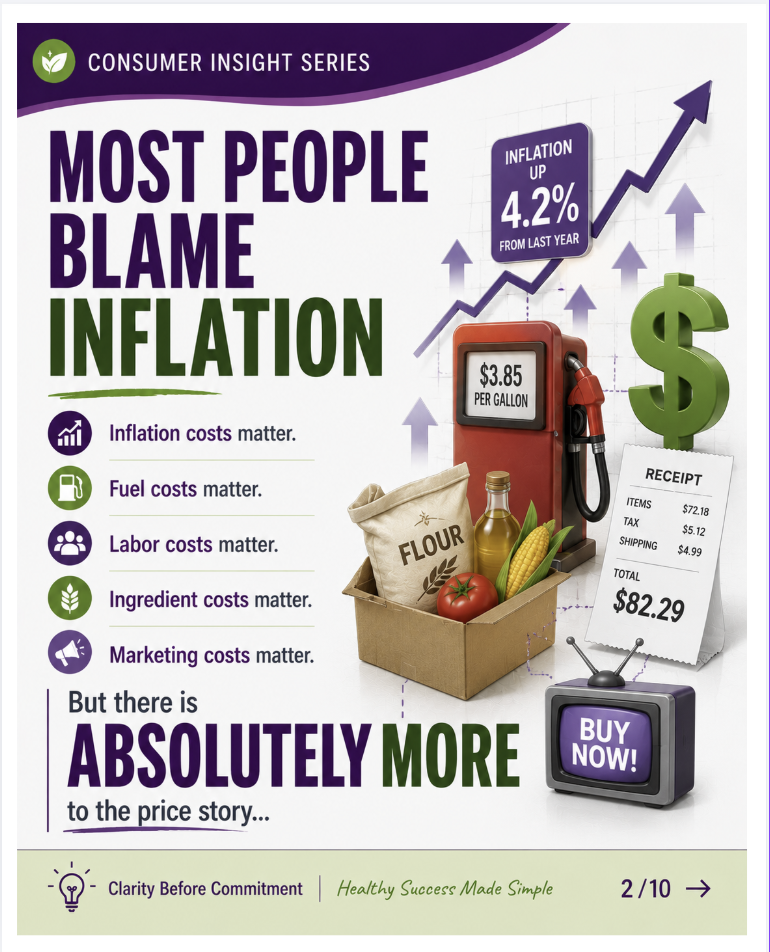
What Factors Influence Product Prices?
Many costs are built into products long before they reach store shelves.
Some of the biggest include:
Manufacturing
Raw materials
Labor
Packaging
Transportation
Fuel
Warehousing
Inventory management
Distribution
Retail overhead
Marketing and advertising
Product returns
Customer service
Taxes and regulatory compliance
Every company manages these costs differently, which is why two products that appear similar may have very different prices.
These factors influence nearly every consumer product, but they become especially important for items you purchase over and over again, including:
Household cleaning products
Personal care products
Nutritional supplements
Paper products
Laundry products
Healthy food and beverages
Even small differences in pricing, concentration, freshness, or distribution can make a meaningful difference over time.
Not Every Product Takes the Same Journey
One misconception many consumers have is believing every company operates the same way.
They don't.
👉 Some companies manufacture their own products.
👉 Some hire other manufacturers.
👉 Some own their warehouses.
👉 Others rely on multiple third parties.
👉 Some products travel thousands of miles before reaching consumers.
👉 Others travel only a few hundred.
👉 Some products may sit in storage for months—or even years.
👉 Others are produced much close to the time they're purchased.
Bottom line - Different journeys create different costs.
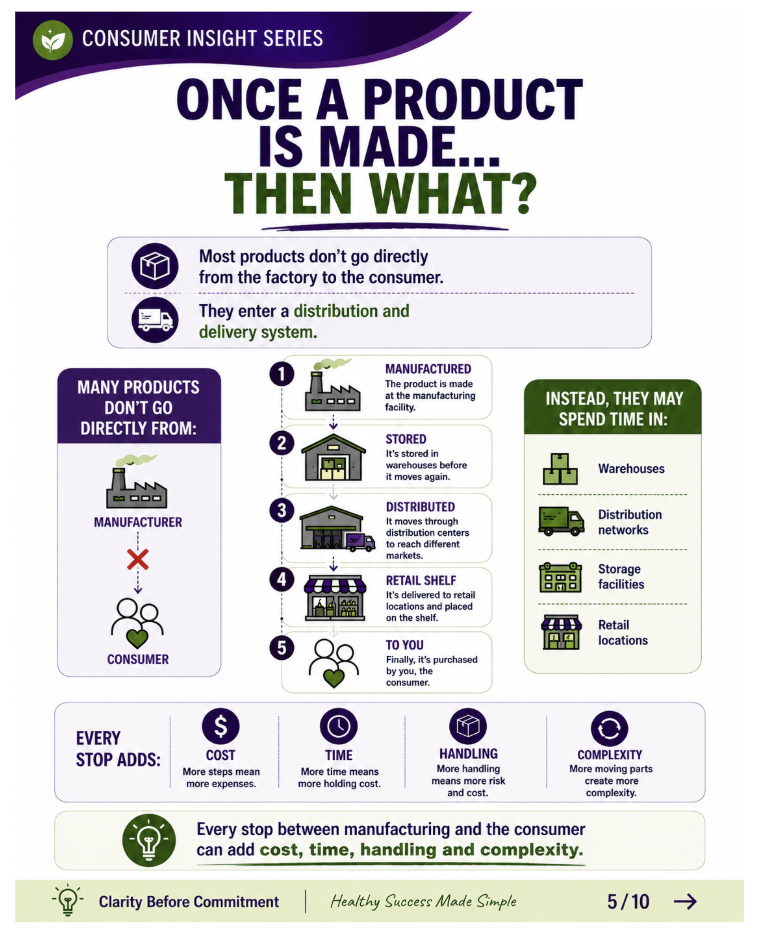
Why Does Time Matter?
Time is one of the hidden costs many people never think about.
The longer products spend moving through supply chains, the more companies often spend on:
Storage
Inventory financing
Warehousing
Additional transportation
Handling
Forecasting demand
Product loss
Repackaging
Longer timelines don't just affect costs.
Depending on the product, they can also influence freshness, inventory turnover, and the frequency with which formulas or designs are updated.
You're Often Paying for More Than the Product
Think about some of the biggest brands in the world.
Many invest millions - or even billions - of dollars each year in:
Television commercials
Celebrity endorsements
Professional athletes
Sporting event sponsorships
National advertising campaigns
Social media advertising
Influencer partnerships
Retail displays
Marketing isn't inherently good or bad - but it does cost money - and those costs are often built into the final price consumers pay.
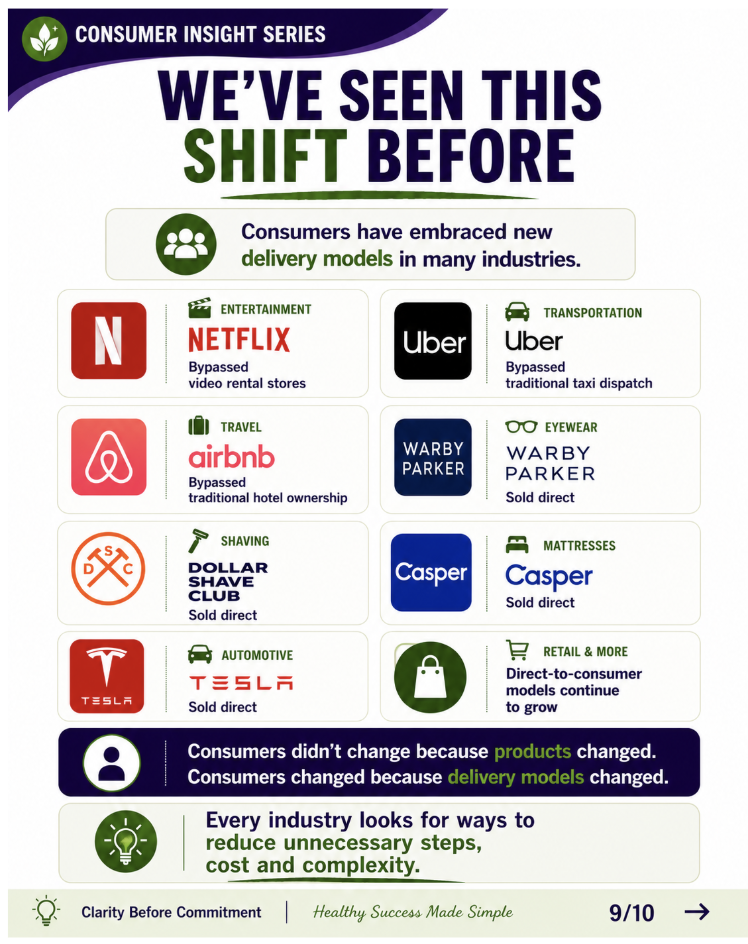
We've Seen Business Models Change Before
Many industries have found ways to simplify how products and services reach consumers.
Think about companies that transformed their industries by reducing unnecessary steps or changing traditional distribution models.
• Streaming services changed how we watched movies.
• Ride-sharing changed transportation.
• Direct-to-consumer eyewear changed how many people buy glasses.
• Online mattress companies simplified furniture shopping.
These companies didn't succeed simply because their products were different. They changed how products and services reached consumers.
Bottom line: Business models matter.
The Real Issue Isn't Just Inflation
Inflation affects everyone.
But for most households, the bigger challenge is that income doesn't always keep pace with expenses.
Families have budgets, priorities, and financial goals.
Every purchasing decision becomes a balancing act between needs, wants, and available resources.
That's why understanding value - not just price- becomes increasingly important.
Better Questions Lead to Better Decisions
Instead of asking only...
"Why is this so expensive?"
Consider asking:
How was this product made?
How many companies handled it before it reached me?
How long did it take to get here?
What am I paying for besides the product itself?
Is there another business model that delivers similar quality in a different way?
Which features matter most to me?
Those questions don't guarantee lower prices.
But they often lead to better decisions.
Also consider asking:
• Is this concentrated or diluted?
• How long has it been sitting in warehouses?
• Am I paying for the product—or the advertising?
• How often will I purchase this item?
• What's the cost per use instead of the cost per package?
• Is freshness important for this product?
• Could a different business model deliver similar quality for less?
Frequently Asked Questions
Why does everything feel so expensive today?
Inflation is one factor, but prices are also influenced by labor costs, transportation, fuel, manufacturing, warehousing, marketing, retail overhead, and supply chain complexity.
Is inflation the only reason prices have increased?
No. Inflation affects costs throughout the economy, but individual product prices are also shaped by business decisions, distribution methods, marketing expenses, production costs, and consumer demand.
Why do similar products sometimes have very different prices?
Products that appear similar may differ in manufacturing standards, ingredient quality, sourcing, transportation distance, marketing budgets, warranties, customer service, or the number of businesses involved before reaching consumers.
Does buying directly from a manufacturer save money?
Sometimes. Companies that manufacture and sell directly to consumers may reduce certain distribution costs. However, pricing still depends on product quality, production methods, customer service, and overall business strategy.
What is a supply chain?
A supply chain is the complete journey a product takes—from raw materials and manufacturing through transportation, warehousing, distribution, retail, and ultimately to the consumer.
Why does advertising affect prices?
Advertising helps companies build brand awareness and attract customers, but marketing campaigns require significant investment. Those costs are often included as part of the overall price consumers pay.
How can I become a smarter shopper?
Rather than focusing only on price, consider the overall value a product provides. Understanding how products are made, how they reach consumers, and what factors influence pricing can help you make decisions that better align with your needs and budget.
Clarity Before Commitment
One lesson I've learned throughout my career - in business, technology, risk management, and now consumer education - is that better decisions usually begin with better information.
Whether we're evaluating household products, financial choices, wellness solutions, or business opportunities, understanding how something works often brings greater confidence to the decision.
That's the idea behind Clarity Before Commitment.
My goal isn't to tell you what to buy - it's to encourage you to ask better questions, explore your options, and make informed decisions based on what matters most to you.
Key Takeaways
Inflation is only one piece of today's pricing story.
Every step in a product's journey can add cost.
Different business models create different pricing structures.
Marketing and distribution expenses often become part of the final price.
Looking beyond the price tag can help you better understand value.
Better information leads to more confident decisions.
Continue Learning
If you're interested in becoming a more informed consumer, you may also enjoy:
• Cleaning vs. Disinfecting: Why They Aren't the Same
• Does Natural Really Mean Better?
• Understanding Product Ingredients
• How to Read Product Labels
• Choosing Better Household Products
These articles are (or will be) built on the same goal:
Helping you make healthier, safer, and more confident purchasing decisions.
Continue the Conversation
Have you noticed products that seem to have increased in price far more than expected?
Or have you discovered companies or business models that deliver great value in a different way?
I'd love to hear your thoughts in the comments.


